by
DEWW IT Solutions
| Jul 23, 2026
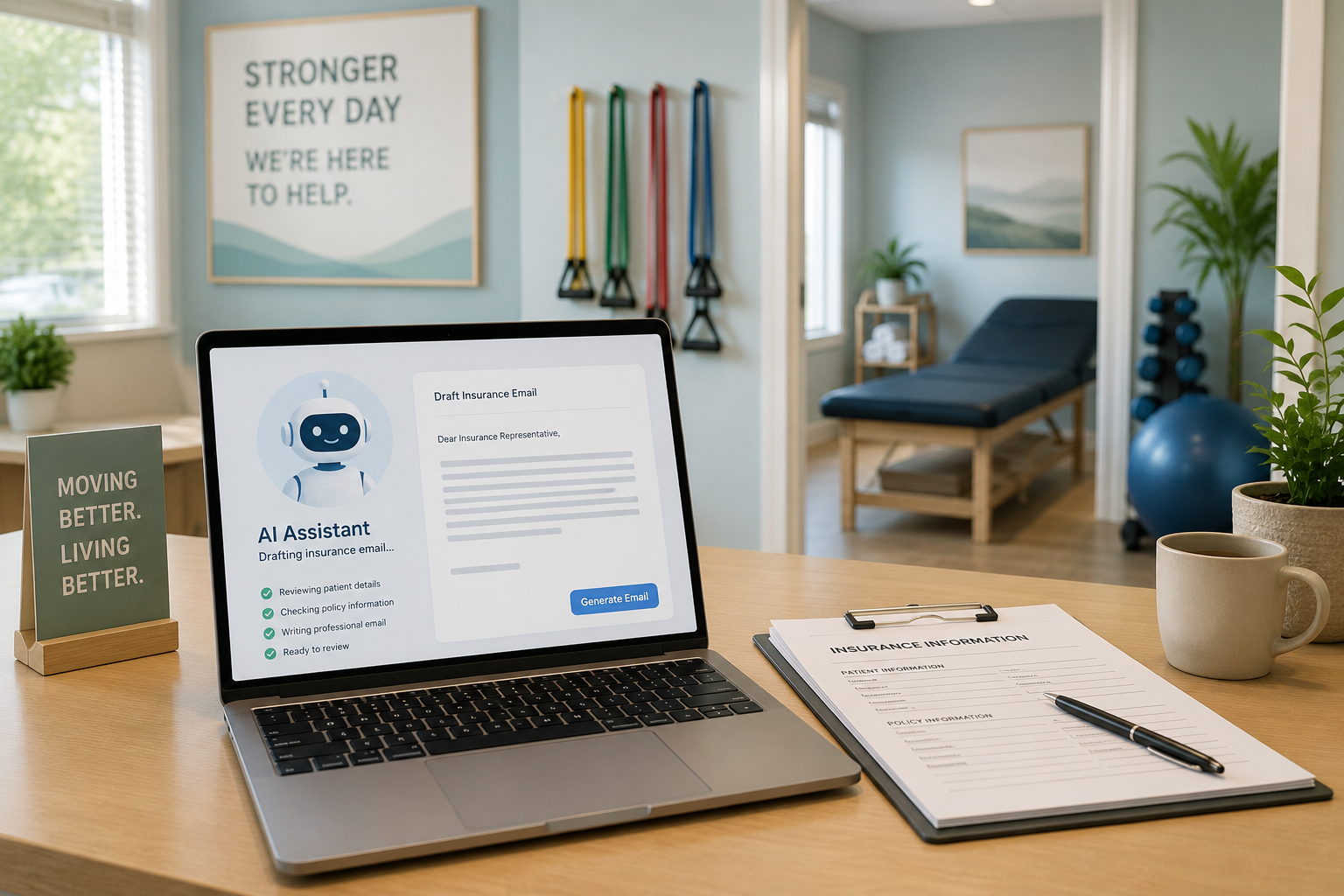
For a small physical therapy clinic, insurance emails can feel like a full-time job hiding inside another full-time job.
You are following up on prior authorizations, checking claim status, asking about denials, sending documentation, clarifying plan rules, and trying to get straight answers without spending half the day typing the same thing in slightly different ways.
That is where AI can be a big help.
Used the right way, AI can help your team write clearer, faster, more professional emails to insurance companies. Used the wrong way, it can create privacy problems, incorrect information, or emails that sound polished but say the wrong thing.
The goal is not to let AI “handle insurance.” The goal is to let AI help your staff say what they already know in a cleaner, more organized way.
First, Remember What AI Should and Should Not Do
AI is a writing helper. It is not your billing expert, compliance officer, provider, or final decision-maker.
Think of it like a very fast assistant who is great at organizing words but still needs someone from your clinic to check the facts. It can help turn a messy note into a professional message, but your team must make sure the email is accurate before it goes out.
For PT clinics, this matters because emails to insurance companies may include protected health information, also called PHI. HIPAA allows health care providers to use or disclose PHI for treatment, payment, and health care operations in certain situations, but those uses still come with limits and protections. HHS also explains that practices should limit PHI to the minimum necessary when using or disclosing it for payment and health care operations.
In plain English: only share what is needed, only with the right people, and only through approved tools.
The Golden Rule: Do Not Paste Patient Information Into Random AI Tools
This is the most important part.
A clinic team member should not copy and paste patient names, dates of birth, member ID numbers, diagnosis details, treatment notes, claim numbers, or insurance correspondence into a public AI tool unless the clinic has approved that tool for use with PHI.
If an AI vendor will create, receive, maintain, or transmit electronic PHI on behalf of the clinic, the clinic generally needs the proper business associate agreement and safeguards in place. HHS states that business associate contracts must define permitted uses of PHI and require appropriate safeguards, including safeguards for electronic PHI.
A safer everyday workflow is to use placeholders while drafting. For example, instead of entering a patient’s real name, use “[Patient Name].” Instead of a real claim number, use “[Claim Number].” Instead of specific visit details, use “[Brief Treatment Summary].”
Then, after AI helps draft the email, your trained staff can add the correct information inside your approved system or secure email process.
Where AI Can Help the Most
AI is especially useful when your staff already knows what needs to be said but needs help saying it clearly. That happens a lot in PT billing and insurance communication.
Here are smart ways a small PT clinic can use AI when writing insurance emails:
- Turn rough notes into a professional email for claim status follow-up.
- Rewrite a denial response so it sounds clear, calm, and organized.
- Create a prior authorization request draft using placeholders.
- Shorten a long email so the insurance rep can quickly understand the request.
- Make the tone more polite without watering down the message.
- Create reusable templates for common situations like missing documentation, benefits clarification, medical necessity review, and appeal follow-up.
That one simple change can save your front desk or billing team a surprising amount of time.
Instead of starting from a blank screen, they start with a solid draft.
A Good AI Prompt Makes a Big Difference
AI works better when your team gives it clear instructions. A vague prompt creates a vague email. A specific prompt creates something much more useful.
Here is a safe example your clinic could use:
“Draft a professional email to an insurance company asking for the status of a physical therapy claim. Use placeholders for patient name, date of birth, member ID, claim number, date of service, and provider name. Keep the tone polite, direct, and easy to understand. Ask what additional information is needed, if any.”
That prompt does three helpful things.
It tells AI the purpose of the email. It tells AI to use placeholders instead of private patient details. It also tells AI what kind of tone the clinic wants.
That is the sweet spot.
Sample AI-Assisted Insurance Email
Subject: Claim Status Request for Physical Therapy Services
Hello,
I am reaching out to request an update on the status of the claim for [Patient Name], date of birth [DOB], member ID [Member ID], for physical therapy services provided on [Date of Service].
Claim number: [Claim Number]
Provider: [Provider Name]
Clinic: [Clinic Name]
Please let us know whether this claim is still in process, denied, pending additional information, or requiring any action from our office.
If additional documentation is needed, please confirm exactly what is required and where it should be sent.
Thank you,
[Staff Name]
[Clinic Name]
[Clinic Phone Number]
This kind of email is simple, clear, and easy for an insurance representative to respond to. No fluff. No long story. No “mystery meat” message where everyone has to guess what is being requested.
AI Can Help With Denials, But It Should Not Invent Medical Reasons
Insurance denials are one area where AI can be very helpful, but clinics need to be careful.
AI can help organize an appeal letter. It can make the tone professional. It can summarize the clinic’s request. It can help make sure the email asks for the next step clearly.
What it should not do is make up clinical details, add treatment goals that are not in the chart, exaggerate the patient’s condition, or create medical necessity language that the provider has not reviewed.
That is where the human review matters.
Before sending an AI-assisted appeal or reconsideration request, the billing team and provider should confirm that the email matches the actual documentation. AI should polish the message, not decorate the facts.
Keep the Email Short and Easy to Answer
Insurance companies handle a lot of messages. A long, winding email can slow things down.
A good insurance email usually answers four questions quickly: who the message is about, what claim or request is involved, what the clinic needs, and what response is expected.
AI can help by taking a long draft and making it shorter. A helpful prompt would be:
“Rewrite this insurance email so it is shorter, clearer, and easier to respond to. Do not add any new facts. Keep all placeholders in place.”
The phrase “do not add any new facts” is important. It reminds the AI to clean up the writing without getting creative.
Have a Clinic Policy Before Staff Start Using AI
Small clinics do not need a 90-page AI policy to get started, but they do need clear house rules.
The clinic should decide which AI tools are approved, what information staff can enter, who reviews AI-generated emails, and where final emails should be sent from. The HIPAA Security Rule requires covered entities and business associates to use administrative, physical, and technical safeguards to protect electronic PHI, so the clinic’s AI workflow should fit into its broader privacy and security practices.
A simple policy could say: “Use AI only with placeholders unless the tool has been approved for PHI. Every AI-assisted insurance email must be reviewed by trained staff before sending.”
That alone can prevent a lot of headaches.
The Best Use of AI Is Consistency
For a small PT clinic, one of the biggest wins is consistency.
When every staff member writes insurance emails differently, messages can become uneven. One person may include too much information. Another may forget key details. Another may sound frustrated after a long day on hold with insurance.
AI can help create a consistent clinic voice: polite, direct, organized, and professional.
That matters because cleaner communication can reduce back-and-forth, improve documentation trails, and make your team look more buttoned-up.
Final Thoughts
AI can be a great tool for small PT clinics, especially when your team is buried in insurance follow-ups, denials, authorizations, and claim questions.
The key is to use AI as a drafting assistant, not as a replacement for trained staff. Keep patient information protected. Use placeholders. Review every message before sending. Make sure the facts match the chart. And choose tools that fit your clinic’s privacy and security responsibilities.
When used wisely, AI can help your PT clinic spend less time wrestling with email wording and more time helping patients get the care they need.
Need help making sure your clinic’s technology is secure, organized, and ready for modern tools like AI? DEWW I.T. Solutions helps small businesses make smart technology choices without the tech headache. Call 361-575-7656.
